For decades, the commercial model for road infrastructure has been relatively straightforward: build the asset, operate it efficiently, and generate revenue primarily through tolls, concessions, or government-backed payments.
But infrastructure is changing.
Roads, bridges, tunnels, transport corridors, and the assets surrounding them are becoming increasingly connected. Sensors, cameras, IoT devices, digital twins, EV infrastructure, payment platforms, and operational systems are generating a continuous stream of data about how infrastructure is being used and how it is performing.
That creates an opportunity to rethink a fundamental question:
What if infrastructure could generate value beyond the vehicles that pass through a toll gate?
The next generation of infrastructure will not simply be physical assets. It will increasingly function as a connected platform, creating opportunities for new services, partnerships, and revenue models.
From Infrastructure Asset to Infrastructure Platform
Traditionally, infrastructure owners have focused on three priorities: availability, safety, and operational efficiency.
Those priorities remain essential. But connected infrastructure introduces a fourth dimension: commercial value creation.
Consider what a major transport corridor can potentially understand in real time:
- Traffic volumes and movement patterns
- Congestion and journey times
- Asset condition and maintenance requirements
- Weather and environmental conditions
- EV charging demand
- Incident patterns
- Freight and logistics movement
- Utilisation of surrounding facilities and services
Individually, these data points help operators manage infrastructure better. Connected through a common operational environment, they can support entirely new services.
Instead of asking only “How do we operate this asset more efficiently?”, infrastructure owners can begin asking “What additional value can this asset enable?”
Five Revenue Opportunities Emerging Around Connected Infrastructure
1. EV Charging and Energy Services
The growth of electric mobility is turning transport infrastructure into part of the energy ecosystem.
Highways, parking facilities, transport hubs and service areas can support EV charging, fleet charging and, over time, more sophisticated energy services.
For infrastructure owners, the opportunity may extend beyond simply leasing space to charging operators. Connected systems can help understand demand patterns, optimise charger utilisation, coordinate energy consumption, and identify where additional capacity should be deployed.
As transport and energy infrastructure become more interconnected, energy becomes a potential service layer around the physical asset.
2. Mobility and Data Services
Connected infrastructure produces valuable operational information.
Real-time traffic conditions, road closures, incidents, travel times, weather conditions and infrastructure availability can be useful to logistics companies, fleet operators, mobility platforms and other ecosystem participants.
The opportunity is not necessarily to “sell data” in its raw form. In many cases, the greater value lies in turning operational data into trusted services, APIs or insights that ecosystem partners can consume, subject to appropriate privacy, security, governance, and regulatory requirements.
A logistics operator, for example, may value predictive information about congestion or disruption far more than a historical traffic dataset.
The commercial product is not the data itself. It is the decision advantage created from it.
3. Dynamic Commercial Ecosystems
Transport corridors connect people not only to destinations, but also to businesses.
Service areas, retail locations, parking facilities, hospitality providers, logistics hubs and other commercial operators form an ecosystem around infrastructure.
Connected infrastructure creates opportunities to make those interactions more intelligent.
Imagine a motorway environment where digital systems understand traffic flows, charging availability, parking capacity and journey conditions. Services could potentially be surfaced based on contextual factors such as location, demand and availability.
Over time, infrastructure operators could participate in commercial models involving partnerships, service fees, revenue sharing or digital marketplaces.
The road becomes more than a route between two locations. It becomes part of a connected mobility ecosystem.
4. Freight and Logistics Services
Commercial transport presents another significant opportunity.
Freight operators value predictability. Congestion, uncertain journey times, unavailable parking and unexpected disruptions all translate into cost.
Connected corridors could enable premium services around areas such as:
priority access, intelligent routing, secure parking, charging availability, logistics coordination and predictive journey information.
For infrastructure operators, this creates the possibility of differentiated B2B services alongside traditional road access.
Instead of every vehicle interacting with infrastructure in essentially the same way, connected platforms could support services tailored to the needs of different users.
5. Infrastructure-as-a-Service
Roadside connectivity, edge computing, sensor networks, digital maps, geospatial platforms and operational data environments can potentially support services far beyond their original purpose.
Autonomous and connected vehicles, logistics networks, emergency services, telecommunications providers and smart-city platforms may all benefit from access to certain infrastructure capabilities.
This opens the possibility of infrastructure owners becoming platform providers, where selected digital capabilities are made available to partners through carefully governed commercial models.
The Digital Twin Becomes the Commercial Intelligence Layer
A digital twin is often positioned primarily as an operational tool: helping teams visualise assets, monitor conditions, manage maintenance and improve decision-making.
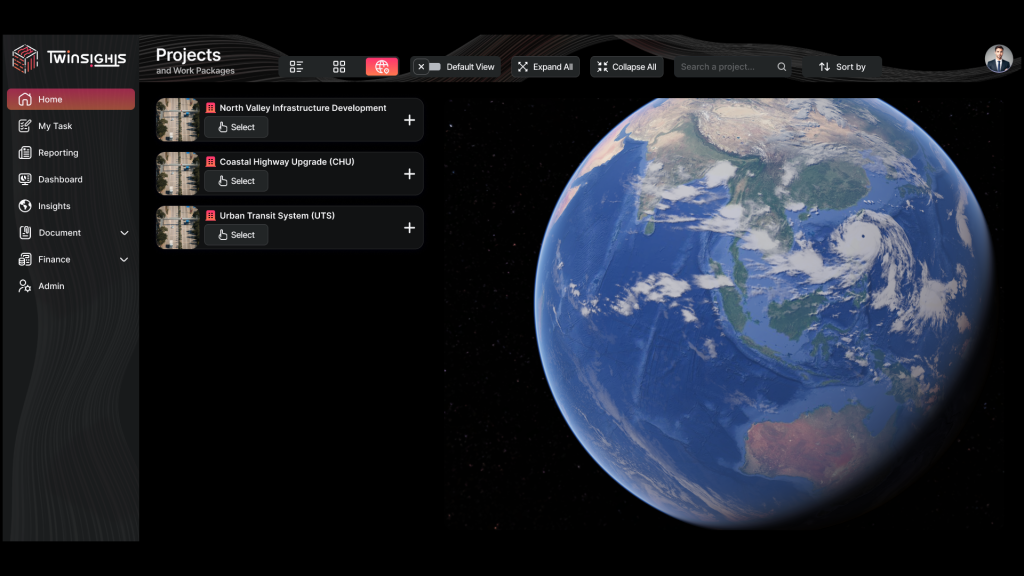
But as infrastructure becomes more connected, the digital twin can also become a foundation for understanding how the asset creates value.
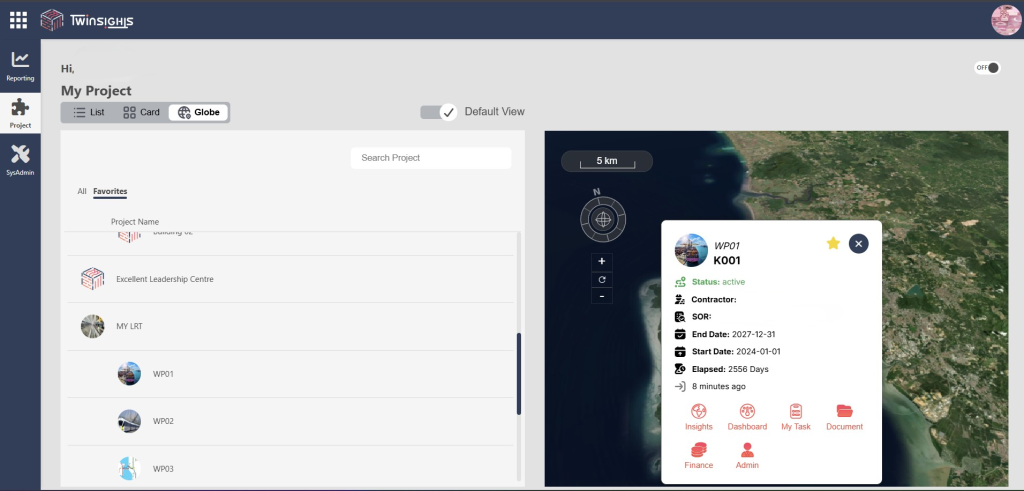
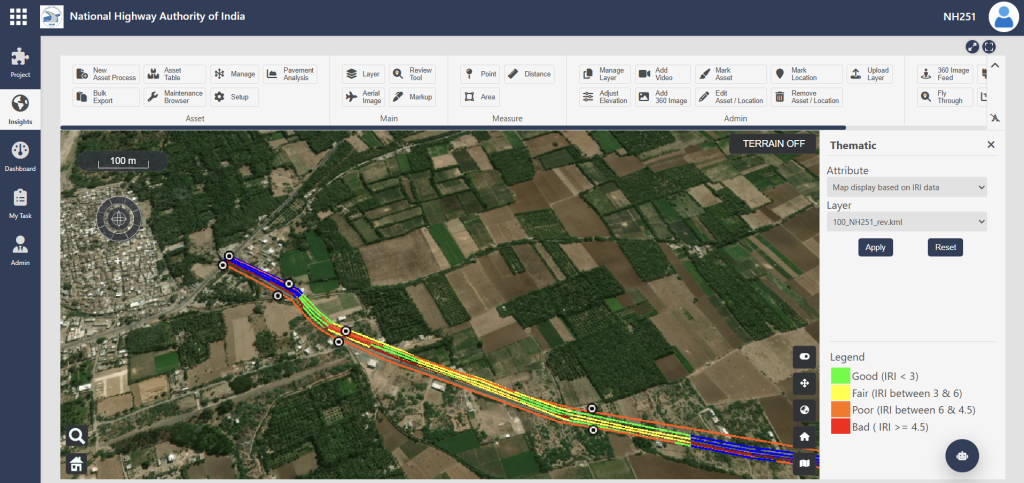
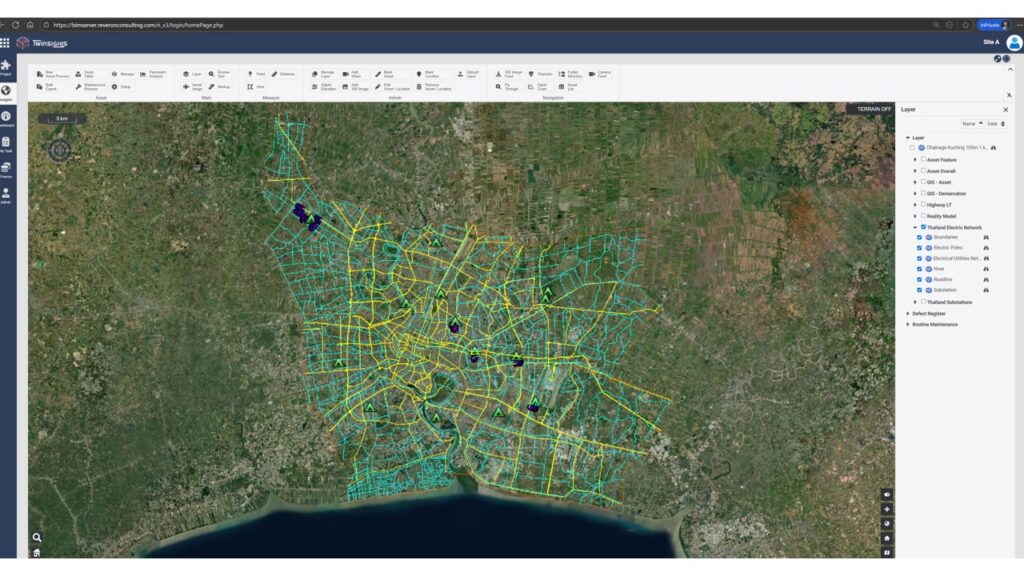
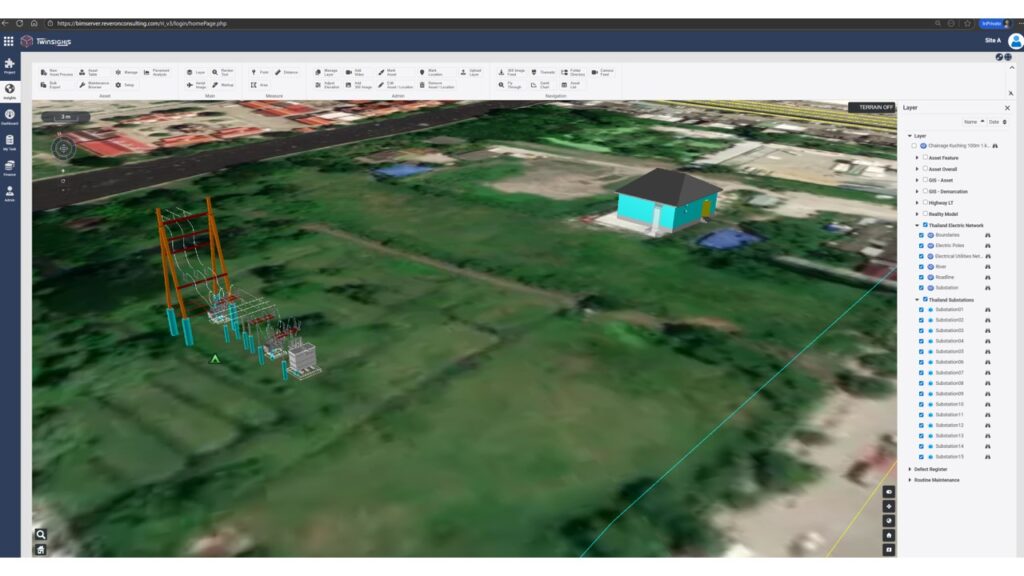
Imagine bringing together geospatial information, IoT data, traffic patterns, asset condition, EV charging utilisation, environmental information and commercial activity within a unified environment.
Instead of seeing individual systems and assets, operators gain a dynamic view of the entire ecosystem.
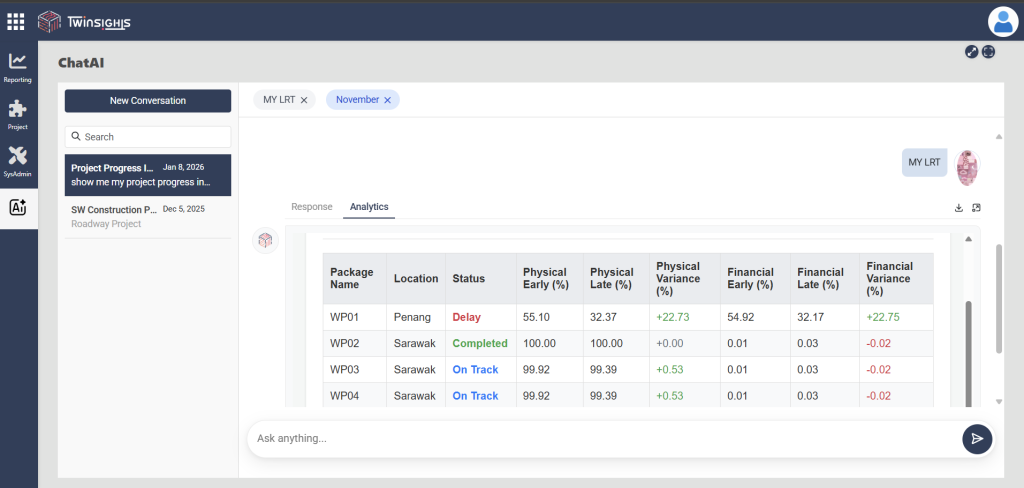
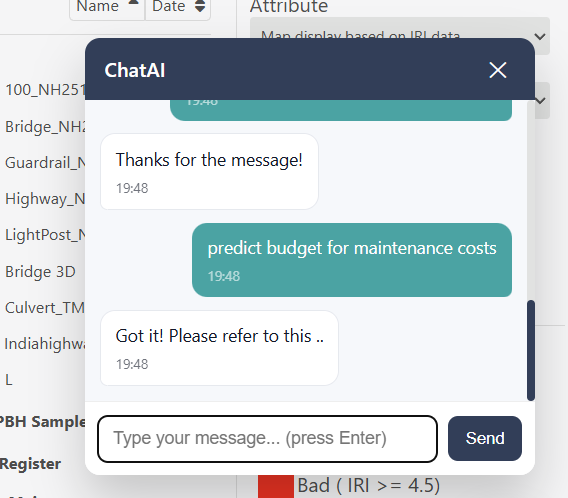
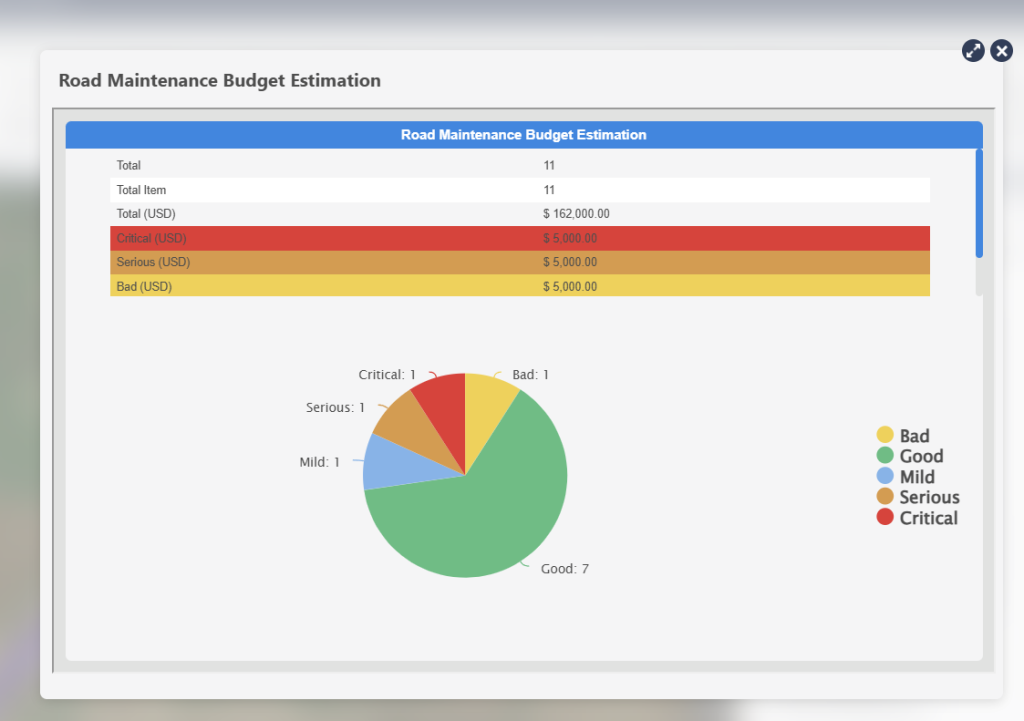
AI can take that further. It can identify patterns in demand, predict congestion, anticipate maintenance requirements, optimise asset utilisation and potentially reveal commercial opportunities that would be difficult to identify through siloed systems.
The progression becomes:
Connect → Understand → Predict → Act
First, connect the infrastructure and its data. Then understand what is happening across the network. Apply AI and analytics to predict what is likely to happen next. Finally, turn those insights into operational or commercial action.
And as agentic AI develops, parts of that final stage may increasingly become automated within defined governance and operational boundaries.
The Bigger Opportunity: Monetising Outcomes, Not Data
The future of connected infrastructure is unlikely to be about simply collecting more data and finding someone willing to buy it.
The stronger opportunity is to create services around outcomes.
- A freight operator does not necessarily want traffic data. It wants a more predictable journey.
- An EV driver does not want charger utilisation statistics. They want confidence that charging will be available when they arrive.
- A retailer does not necessarily want mobility data. It wants better visibility into potential demand.
An infrastructure owner therefore needs to move up the value chain:
That is a very different commercial model from traditional infrastructure.
Not Every Connected Service Needs to Become a Revenue Stream
There is also a danger in treating every dataset or digital capability as something that should be monetised. Infrastructure operators still have responsibilities around public safety, privacy, cybersecurity, equitable access, interoperability and regulatory compliance. Some information should remain open. Some capabilities may be better used to improve operational efficiency or customer experience rather than directly generate revenue.
Building the Foundation for Connected Infrastructure
New revenue models cannot be layered onto fragmented infrastructure overnight.
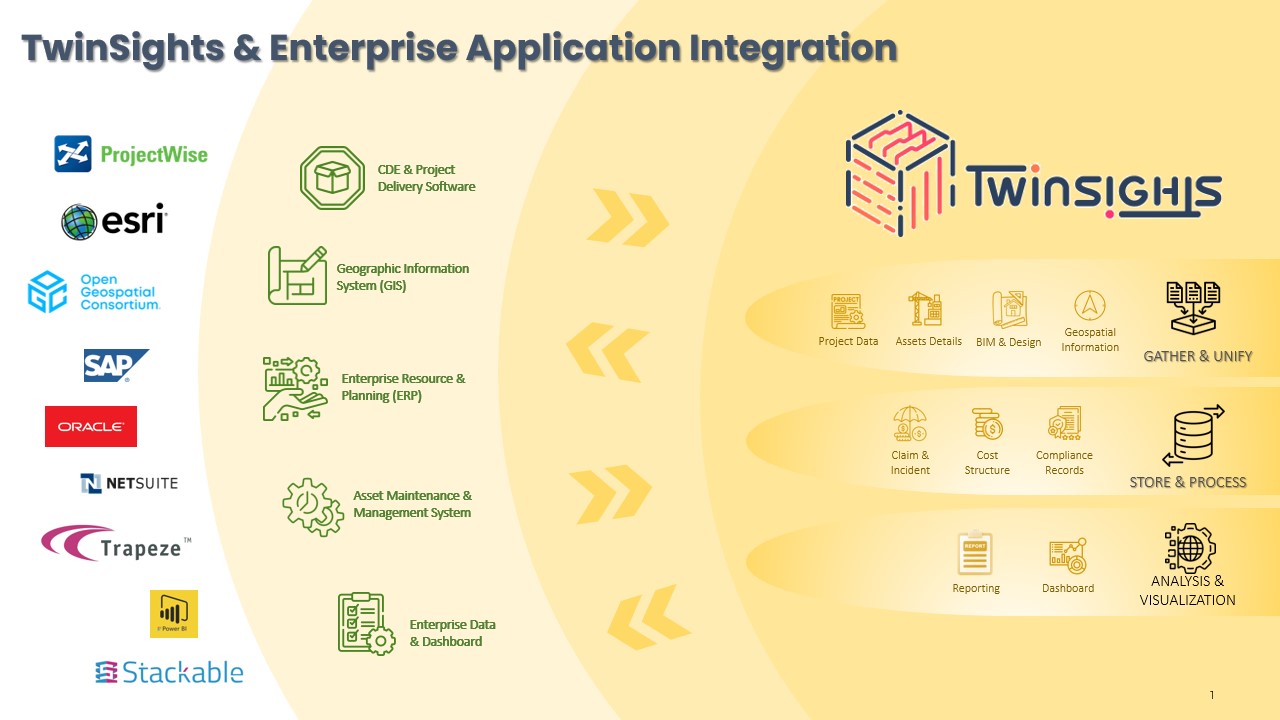
They require a digital foundation capable of bringing together operational technology, enterprise systems, IoT, geospatial information and external ecosystem data.
That means infrastructure owners need to think about several capabilities together: a unified data environment, interoperable platforms, digital twins, real-time connectivity, AI and analytics, APIs, cybersecurity, identity, governance and increasingly edge computing.
The architecture also needs to remain open enough to accommodate services and business models that may not exist today.
Because the biggest opportunity may not be the use case an infrastructure owner can identify now. It may be the ecosystem of services that becomes possible once the infrastructure is connected, intelligent and extensible.
From Cost Centre to Value Platform
For much of its history, infrastructure technology has been justified through efficiency: reducing maintenance costs, improving safety, extending asset life or improving operations.
Digital capability can move from being purely an operational investment to becoming part of the asset’s commercial strategy.
Tolls may continue to be an important source of revenue. But they no longer need to define the limits of the business model.
The infrastructure of the future can potentially create value through mobility services, energy, logistics, digital platforms, ecosystem partnerships and entirely new services that have yet to emerge.
The opportunity is not simply to build smarter roads. It is to build infrastructure capable of creating new value throughout its lifecycle.
Bring your infrastructure to life with Twinsights today
For more updates, follow us on LinkedIn, Twitter, Facebook, and Instagram.