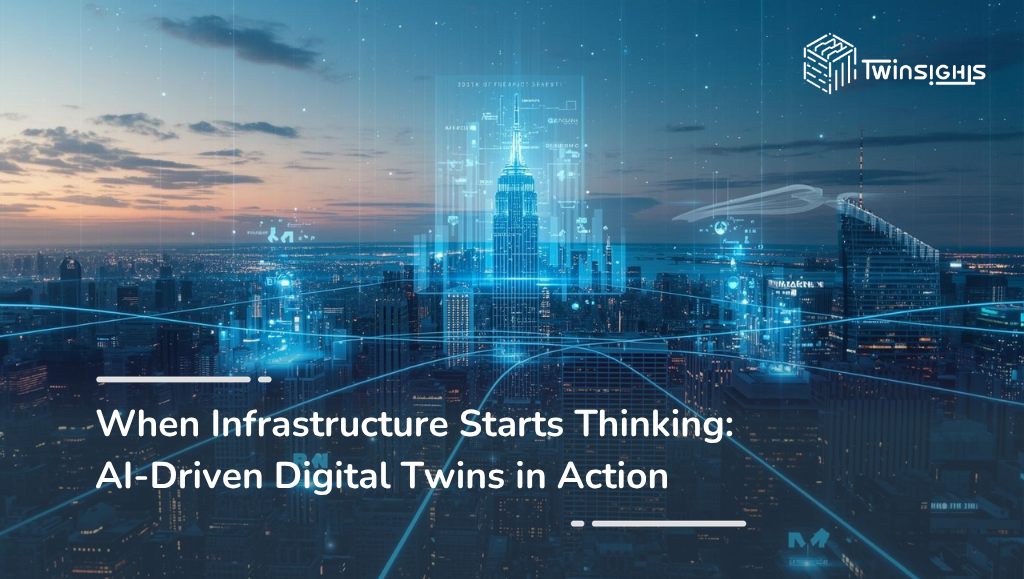
When Infrastructure Starts Thinking: AI-Driven Digital Twins in Action 

For decades, infrastructure has been built to endure, not to think. 

Factories run on schedules. Utilities respond to outages. Supply chains adjust after disruptions. Even the most advanced systems have traditionally been reactive, relying on human intervention to interpret data and make decisions. 

That model is changing. 

With the rise of AI-driven digital twins, infrastructure is no longer just monitored. It is becoming aware, predictive, and increasingly autonomous. What was once a static representation of assets is now a living system that learns, adapts, and guides decisions in real time. 

This shift is not theoretical. It is already happening. 

From Representation to Intelligence 

A digital twin began as a virtual replica of a physical asset or system. It mirrored machines, processes, or entire environments, providing visibility into performance and condition. 

But visibility alone is not enough. 

The real transformation happens when AI is layered onto these twins. 

Instead of simply showing what is happening, AI-driven twins answer deeper questions: 

  • What is likely to happen next? 
  • Why is this deviation occurring? 
  • What action should be taken right now? 

This is where infrastructure starts “thinking.” 

Sensors feed continuous data. Systems across the enterprise connect. AI models analyze patterns, detect anomalies, and simulate outcomes. The twin becomes not just a mirror, but a decision engine. 

The Power of a Connected Ecosystem 

The intelligence of a digital twin depends on how well it is connected. 

In most enterprises, operational data is fragmented: 

  • Shop-floor systems like PLCs and SCADA operate in silos 
  • Enterprise platforms like ERP and SCM hold business context 
  • IoT devices generate streams of real-time data 

AI-driven digital twins bring these layers together. 

When operational technology (OT) and information technology (IT) converge, the twin gains context. It understands not just machine performance, but its impact on production targets, supply chain commitments, and business outcomes. 

This convergence enables a shift from isolated optimization to system-wide intelligence. 

Enter Twinsights: From Data to Decisions 

This is where platforms like Twinsights play a critical role. 

Twinsights is designed to move beyond traditional monitoring by creating a unified digital twin environment that connects assets, processes, and enterprise systems into a single intelligent layer. 

At its core, Twinsights does three things: 

1. Unifies Data Across the Stack 

It integrates data from IoT devices, shop-floor systems, and enterprise applications like Oracle Cloud. This creates a single, consistent view of operations. 

2. Applies AI for Real-Time Intelligence 

AI models analyze streaming and historical data to identify patterns, predict failures, and optimize performance continuously. 

3. Enables Action, Not Just Insight 

Instead of stopping at dashboards, Twinsights drives recommendations and automated actions, closing the loop between insight and execution. 

The result is a system that doesn’t just inform decisions. It actively supports them. 

The Twinsights Command Centre: Where It All Comes Together 

If Twinsights is the brain, the Twinsights Command Centre is the control room. 

It provides a real-time, immersive view of operations across assets, plants, and enterprise systems. But more importantly, it changes how decisions are made. 

In a traditional setup: 

  • Teams monitor dashboards 
  • Issues are identified manually 
  • Decisions are escalated and acted upon 

In the Twinsights Command Centre: 

  • Anomalies are detected automatically 
  • Root causes are suggested instantly 
  • Scenarios can be simulated before action 
  • Decisions are executed faster, with confidence 

It shifts operations from reactive firefighting to proactive control. 

Imagine a manufacturing plant where a slight vibration anomaly is detected in a critical machine. Instead of waiting for failure: 

  • The system predicts the likelihood of breakdown 
  • It assesses impact on production schedules 
  • It recommends optimal maintenance timing 
  • It aligns with supply chain commitments automatically 

All of this happens in near real time. 

That is infrastructure thinking. 

Real-World Impact Across Industries 

AI-driven digital twins are not limited to one sector. Their impact spans multiple industries: 

Manufacturing 

  • Predictive maintenance reduces downtime 
  • Production lines self-optimize based on demand and constraints 
  • Quality issues are detected before they escalate 

Energy & Utilities 

  • Grid performance is monitored and optimized dynamically 
  • Outages are predicted and mitigated proactively 
  • Renewable integration becomes more stable and efficient 

Supply Chain & Logistics 

  • End-to-end visibility across movement of goods 
  • Scenario simulation for disruptions 
  • Real-time optimization of routes and inventory 

Smart Infrastructure & Cities 

  • Traffic systems adapt dynamically 
  • Infrastructure usage is optimized 
  • Public services become more responsive 

In each case, the shift is the same: from observing systems to orchestrating them. 

From Insights to Autonomy 

The ultimate promise of AI-driven digital twins is autonomy. 

Today, most systems operate in a “human-in-the-loop” model, where AI provides recommendations and humans make decisions. 

But as trust in these systems grows, we move toward: 

  • Human-on-the-loop systems (AI acts, humans supervise) 
  • Eventually, selective autonomy in controlled environments 

This does not eliminate humans. It elevates their role. 

Instead of reacting to issues, teams focus on strategy, exceptions, and continuous improvement. 

The Challenges to Get There 

While the vision is compelling, getting there requires overcoming real challenges: 

Data Quality and Integration 

Disconnected, inconsistent data can limit the effectiveness of digital twins. 

Change Management 

Shifting from reactive to AI-driven decision-making requires cultural change. 

Trust in AI Systems 

Organizations must build confidence in AI recommendations through transparency and governance. 

Scalability 

Moving from pilot projects to enterprise-wide deployment is often the hardest step. 

Platforms like Twinsights address these by providing a structured, scalable foundation for building and operationalizing digital twins across the enterprise. 

A New Operating Model for Infrastructure 

We are entering a phase where infrastructure is no longer passive. 

It senses. 
It learns. 
It predicts. 
It responds. 

AI-driven digital twins, powered by platforms like Twinsights and orchestrated through the Twinsights Command Centre, are redefining how enterprises operate. 

This is not just about efficiency. It is about control, resilience, and intelligence at scale. 

The question is no longer whether infrastructure can think. 

It is how quickly organizations are ready to let it. 

For more updates, follow us on LinkedInTwitterFacebook, and Instagram.

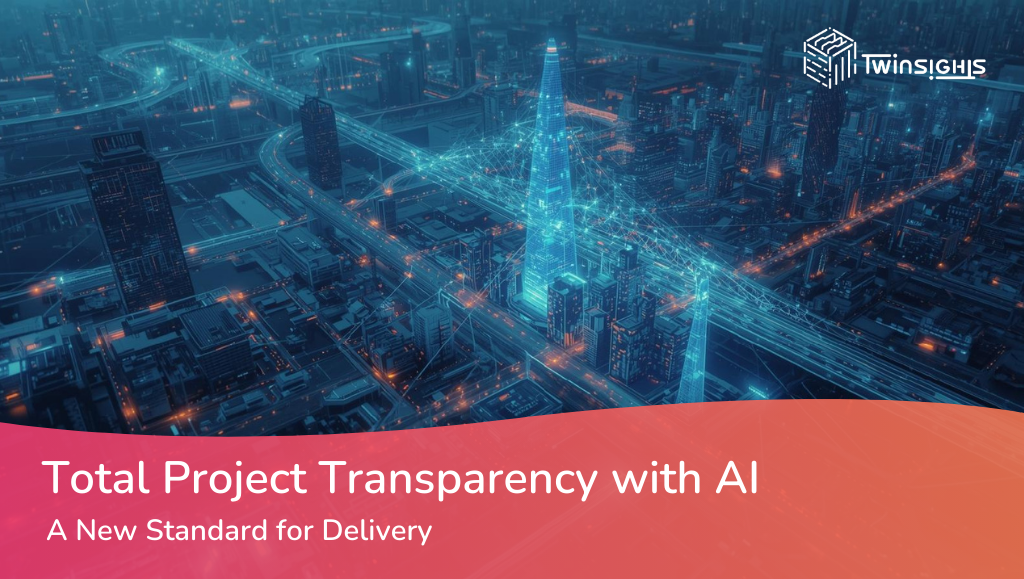
Total Project Transparency With AI: A New Standard for Delivery

For years, project transparency meant dashboards, weekly reports, and slide decks carefully assembled before steering meetings. Information moved upward in controlled summaries. Risks were filtered. Status was interpreted. 

AI is changing that model. 

Instead of asking, “What happened last week?” organizations can now ask, “What is happening right now?” More importantly, they can ask, “What is likely to happen next?” 

This shift is moving project delivery toward something more ambitious than visibility. It is moving toward total project transparency. 

And platforms like Twinsights are pushing that shift from theory into operational reality. 

What Total Transparency Actually Means 

Transparency is often confused with more reporting. In practice, it means less manual reporting and more shared truth. 

AI-powered transparency connects live data across tools, workflows, and teams. It draws from task systems, financial platforms, communications, risk logs, and delivery milestones to build a continuous view of performance. 

Most modern tools have introduced AI features that summarize progress or forecast timelines. But aggregation alone is not enough. 

True transparency requires orchestration. 

This is where a centralized intelligence layer becomes critical. 

The Role of Twinsights Command Centre 

Twinsights Command Centre model goes beyond dashboards. It acts as a live operational nerve center. 

Twinsights Command Centre is a single source of delivery truth across complex infrastructure projects. Instead of forcing leaders to jump between systems, it consolidates signals into one continuous performance view. 

The value is not just consolidation. It is interpretation. 

For example: 

  • It can flag emerging schedule slippage before a milestone is missed. 
  • It can detect workload imbalance across teams. 
  • It can highlight risk clustering across related projects. 
  • It can surface dependencies that are likely to cascade delays. 

Rather than waiting for a red status report, leadership sees leading indicators in real time. 

The Command Centre model shifts projects from reactive to predictive. 

From Lagging Indicators to Leading Signals 

Traditional project reporting focuses on lagging indicators. A missed deadline, an exceeded budget, a failed sprint. By the time these are visible, intervention is costly. 

AI enables the detection of patterns that precede failure. 

For instance: 

  • A gradual drop in task completion velocity 
  • Increased change requests late in delivery cycles 
  • Declining testing coverage 
  • Communication bottlenecks between departments 

These patterns are often invisible when looking at one project in isolation. They become clearer when analyzed across portfolios. 

A Command Centre amplifies this capability by correlating signals across multiple initiatives simultaneously. That broader lens is what creates strategic transparency. 

In large-scale environments, similar predictive discipline has long existed in mission-critical settings such as NASA programs, where early anomaly detection is standard practice. AI now brings comparable foresight into enterprise project delivery. 

Eliminating Status Theater 

Anyone who has sat through executive updates knows the dynamic. Projects are green until they are suddenly not. Risks are softened. Forecasts are optimistic. 

Often this is not deception. It is fragmentation. Data lives in different systems. Managers rely on partial information. Human bias fills the gaps. 

A Command Centre reduces subjectivity. 

When progress metrics are derived directly from operational systems, narrative distortion becomes harder. If resource capacity is consistently overextended, the system reflects it. If dependency risk is rising, it is visible before it becomes critical. 

This does not remove human judgment. It grounds discussion in shared data. 

Instead of debating whose version of reality is accurate, teams debate solutions. 

Cultural Implications: Transparency vs Surveillance 

Total transparency sounds powerful. It can also feel threatening. 

AI systems that analyze workflow patterns or communication trends may raise concerns about surveillance. Without careful governance, transparency can be misinterpreted as control. 

Successful Command Centre implementations share three characteristics: 

  1. Clarity of intent 

The purpose is improved delivery, not performance policing. 

  1. Shared visibility 

Insights are accessible across levels, not restricted to senior leadership. 

  1. Actionable follow-through 

Flagged risks lead to support, not punishment. 

When transparency leads to earlier assistance rather than blame, adoption accelerates. 

Technology alone does not create trust. Leadership behavior does. 

Portfolio-Level Intelligence 

One of the most significant shifts AI enables is portfolio-level intelligence. 

In many organizations, each project operates as a silo. Even if individual projects are well-managed, systemic risk remains invisible. 

Twinsights Command Centre provides: 

  • Unified view across operations 
  • Geospatial Intelligence 
  • Asset oversight and compliance visibility 
  • AI-powered chat with contextual insights 

Without an AI-driven consolidation layer, these complex infrastructure projects often require manual reconciliation across departments. 

With AI, they can be accessed on demand. 

Benefits Beyond Reporting 

The operational benefits of AI-driven transparency extend well beyond cleaner dashboards. 

Earlier risk intervention 

Predictive signals allow corrective action before deadlines are missed. 

Reduced administrative burden 

Automated summaries eliminate hours spent preparing status updates. 

Improved executive alignment 

When everyone sees the same real-time data, strategic decisions move faster. 

Stronger client confidence 

Transparent, data-backed reporting builds credibility with external stakeholders. 

In high-complexity industries such as infrastructure, technology transformation, and defense contracting, these benefits directly impact profitability and reputation. 

The Limits of “Total” 

Despite its promise, total transparency has practical limits. 

AI systems depend on clean, integrated data. Poor data hygiene produces misleading insights. Tool fragmentation can still create blind spots. Predictive models provide probabilities, not guarantees. 

Ethical governance also matters. Organizations must define boundaries around data usage, especially when analyzing communication or productivity signals. 

Transparency must be balanced with privacy. 

The most mature implementations treat AI insights as decision support, not decision replacement. 

Is This the New Standard? 

The direction is clear. AI capabilities are becoming embedded across delivery platforms. Executives increasingly expect real-time forecasting rather than static reports. Clients demand predictable outcomes in volatile environments. 

As more organizations adopt Command Centre models like Twinsights’, expectations will shift. 

Manual slide decks will feel outdated. Reactive risk management will feel insufficient. Portfolio oversight without AI support will seem incomplete. 

Just as cloud computing redefined infrastructure expectations, AI-powered delivery intelligence is redefining governance expectations. 

The organizations that adapt early gain a compounding advantage in predictability and confidence. 

What Leaders Should Do Now 

Transitioning toward AI-driven transparency does not require an overnight transformation. 

A pragmatic approach includes: 

  • Mapping existing data sources and integration gaps 
  • Piloting Command Centre capabilities within one portfolio 
  • Establishing data governance standards 
  • Defining ethical usage guidelines 
  • Measuring improvements in risk detection and delivery predictability 

The goal is not to pursue technology for its own sake. It is to reduce uncertainty in complex delivery environments. 

Final Thoughts 

Total project transparency with AI represents more than better reporting. It represents a shift in how organizations understand and manage delivery risk. 

Platforms like Twinsights illustrate what happens when data, predictive analytics, and governance converge in one operational view. 

When implemented thoughtfully, AI does not replace project leadership. It strengthens it. It shortens feedback loops. It surfaces hidden risk. It builds shared clarity across teams. 

Whether this becomes the universal standard for delivery depends on culture as much as capability. The tools are ready. The predictive models are improving rapidly. 

The remaining question is simple. 

Are organizations ready to see everything clearly? 

For more updates, follow us on LinkedInTwitterFacebook, and Instagram.