
Why You Should Invest in Location-Based Digital Twins

The concept of Digital Twins has emerged as a groundbreaking innovation with immense potential in the ever-evolving landscape of technology. These virtual replicas of physical objects or systems have found their applications across various industries, from manufacturing to aerospace, and from healthcare to construction. However, a particular subset of digital twins, known as location-based digital twins, is garnering significant attention and investment. In this blog, we’ll delve into what location-based digital twins are, how they’re different from digital twins, why they are gaining traction, and most importantly, why investing in them could be a game-changer for your organization.

What are Location-Based Digital Twins?

At its core, a location-based digital twin is a dynamic, digital representation of a physical space, such as a city, building, or infrastructure. The only place area where location-based digital twins differ from regular digital twins is that they are usually focused on a larger, fixed area instead of a single building, and include studying not just the physical aspects of the area, but also how the moving and changing elements in that area interact with it. This is made possible by integrating real-time data from various sources, including IoT sensors, satellites, and other monitoring devices, to provide an accurate depiction of the physical environment. This digital twin not only captures the static attributes of the space but also simulates its behavior and interactions over time. But how did these location-based Digital Twins come about?

The Rise of Location Intelligence

The advent of location-based digital twins is closely tied to the growing importance of location intelligence. Having the capability to observe various metrics of a specified location and how different aspects of said location interact with the surroundings can be a game-changer in planning and strategizing to boost efficiency. Businesses and governments alike are realizing the value of leveraging spatial data and using it to make informed decisions and optimize operations. Location-based insights offer a holistic view of complex systems, enabling stakeholders to identify patterns, detect anomalies, and forecast trends with precision. These additional capabilities made available through location intelligence are what brought about the prominence of location-based digital twins. Let’s explore how these and other such capabilities can be leveraged by your business! 

Intelligent Designing

As a business, location-based digital twins technology lets you monitor your surroundings and optimize for it. Retailers, for example, can optimize store layouts based on customer flow, leading to better customer engagement and increased sales. This ability may also allow you to create more energy-efficient designs, by helping you account for the sun’s trajectory in a day, wind patterns, and much more!

Improved Customer Experiences

In many situations, customers are forced to wait in long lines due to a lack of optimization and preparation by a business. For example, as a hotel, customers may have to get into the hotel through a drive-in that leads to a valet area. However, during times of peak traffic or a sudden spike in check-ins, customers may have to wait to get into the hotel, adding to frustration and negatively impacting the customer experience. The ability to monitor their surroundings could help hotels observe the pattern of traffic and plan either their check-in times or their entry points accordingly to minimize waiting times for their customers.

Enhancing Disaster Preparedness

In the face of natural disasters and emergencies, location-based digital twins can be invaluable tools for disaster preparedness and response. By integrating data from sensors, satellites, and social media feeds, emergency responders can gain real-time situational awareness and coordinate their efforts more effectively.

For instance, during a wildfire outbreak, a location-based digital twin can track the fire’s spread, identify at-risk areas, and help people evacuate safely.

New Opportunities for Businesses

Beyond traditional sectors, location-based digital twins can also open up new opportunities for business innovation and entrepreneurship. Startups and tech companies are already leveraging these digital replicas to develop innovative solutions in areas such as augmented reality (AR), smart mobility, and location-based services.

For example, AR applications can overlay digital information onto physical environments, enriching the user experience and creating new avenues for marketing and entertainment. Similarly, companies in the transportation industry are using location-based digital twins to optimize logistics operations, track fleet movements, and enhance supply chain visibility.

Help with Urban Planning and Development (Government Agencies) 

In urban planning and development, location-based digital twins hold immense promise. Cities are becoming increasingly complex ecosystems, facing challenges ranging from traffic congestion to environmental sustainability. It usually comes down to various government agencies to ensure that all of these complex ecosystems continue to thrive together and don’t face any hindrances. By creating digital replicas of urban environments, city planners can visualize different scenarios, simulate policy interventions, and assess their impact in real time. Additionally, they can also model the effects of urban expansion on natural habitats, helping authorities make informed decisions to balance development with environmental conservation.

Here’s why you should opt for location-based Digital Twins 

The rise of location-based digital twins marks a significant milestone in the evolution of digital transformation and spatial analytics. By harnessing the power of real-time data and advanced simulation techniques, these digital replicas are reshaping industries, optimizing processes, and driving innovation.

Whether it’s urban planning, real estate management, emergency response, or business innovation, the potential applications of location-based digital twins are virtually limitless. As businesses and governments navigate an increasingly complex and interconnected world, investing in these digital replicas is not just a choice but a strategic imperative to thrive in the digital age. Embracing location-based digital twins is not just about seeing the future, it’s about shaping it. 

Harnessing the power of location-based Digital Twins with Twinsights

Location-based digital twins can help both private and public organizations step up their productivity and efficiency. Twinsights combines the power of Location-based Digital Twins with intelligent AI-based insights, a powerful dashboard, and additional useful features that take your experience of using the Digital Twins technology to the next level. 

Many industries such as Airports, Railways, Ports, Public Infrastructure, Facilities Management, and Project Delivery have leveraged the potential of Twinsights to drive higher growth and efficiency. It has been used to create designs from the ground up, simulate complex environments to understand them better, improve an organization’s support and maintenance capabilities, boost operational efficiencies, and much more!

With our thorough setup process and a plethora of powerful features including workflow automation and mobility, you can rest assured that your Digital Twins implementation will get you the highest ROI possible. Trust Twinsights to explore the complete potential of Digital Twins for your business.

Follow us on LinkedInTwitterFacebook, and Instagram for more updates.

How Digital Twins Can Revolutionize the Infrastructure and Architecture Industries

In today’s rapidly evolving world, the convergence of technology and traditional industries has brought about transformative changes. One such innovation making waves in the infrastructure and architecture sectors is the digital twin technology. Originally conceived in the realm of manufacturing, this digital twin technology has now found its way into various domains, offering unprecedented opportunities for efficiency, optimization, and innovation. In this blog, we delve into the challenges that the infrastructure and architecture industries, the profound impact digital twins can have on these industries, and how it is reshaping the way we design, construct, and manage our built environment.

Challenges facing the Infrastructure and Architecture Industries

Lack of sustainability

Over time, sustainability has transitioned from being a mere checkbox to a critical focus for all organizations. However, achieving highly efficient designs in construction has been a challenge for this industry. Additionally, the waste of construction materials also adds to a reduction in a project’s sustainability.

Progress Tracking

Construction organizations follow traditional and manual processes when it comes to sharing information on progress made in a project’s construction. This hinders a manager’s ability to stop any potential issues from happening which can in turn lead to delays.

File Sharing

Projects generally involve a large number of stakeholders all of whom need access to a project’s critical information documents and updates. Sharing these files as they keep getting updated becomes a major issue that leads to project delays in the long run and creates a hindrance to internal collaboration. 

Before we understand how Digital Twin technology can address these issues and revolutionize the Infrastructure and Architecture Industries, let’s take a small refresher into what exactly Digital Twin Technologies is.

Understanding Digital Twins

The digital twin is a virtual replica or simulation of a physical asset, process, or system. It encompasses a plethora of data sources, including real-time sensor data, historical records, and predictive analytics, to create a dynamic digital representation that mirrors its physical counterpart. This virtual model enables real-time monitoring, analysis, and simulation of the physical asset or system, offering insights that facilitate better decision-making and performance optimization.

Now that we’ve done a brief refresher on Digital Twin Technology, let’s dive deep into how Digital Twins can completely change the Infrastructure and Architecture Industries. 

Impact of Digital Twin Technology on the Infrastructure and Architecture Industries

Collaboration and File Sharing

Digital twins facilitate collaborative design processes, allowing stakeholders from diverse disciplines to visualize, analyze, and iterate on designs in real time. Architects, engineers, urban planners, and environmental consultants can collaborate seamlessly, identifying potential conflicts, evaluating design alternatives, and optimizing performance parameters before the physical construction begins. This collaborative approach not only enhances design quality but also minimizes costly revisions and delays during later stages of the project.

Enhancing Design and Planning

In the realm of architecture and infrastructure, digital twins serve as invaluable tools throughout the project lifecycle, starting from the conceptualization and design phase. Architects and urban planners can leverage digital twins to create accurate 3D models of buildings, infrastructure networks, and entire cityscapes. By integrating data on geographical terrain, environmental conditions, and urban demographics, designers gain a comprehensive understanding of the project’s context, enabling them to make informed decisions that optimize spatial layouts, energy efficiency, and sustainability.

Improving Sustainability

Digital Twin technologies give architects the ability to create new and innovative infrastructure designs, created from the ground up to be sustainable, both in terms of their capability to save energy and in terms of the materials required to build the project and satisfy its energy requirements. 

Streamlining Construction and Operations

Once the design phase is complete, digital twins continue to play a pivotal role in streamlining construction processes and optimizing operational efficiency. Construction firms utilize digital twins to create detailed 4D simulations, integrating the dimension of time into the virtual model to visualize construction sequences and identify potential bottlenecks or conflicts. This proactive approach enables project managers to optimize resource allocation, schedule activities more efficiently, and mitigate risks associated with delays or cost overruns.

During the construction phase, real-time data provides insights into key performance metrics such as structural integrity, material properties, and environmental conditions. This continuous monitoring allows construction teams to detect deviations from design specifications or safety thresholds promptly, enabling timely interventions to ensure quality and safety standards are upheld.

Once the infrastructure or building is operational, digital twins transition into the realm of facilities management and asset optimization. Facility managers leverage real-time data from within the built environment to monitor metrics such as energy consumption, occupancy patterns, and equipment performance. By analyzing this data within the digital twin environment, managers can identify opportunities for energy savings, predictive maintenance, and space utilization optimization, thereby enhancing the overall lifecycle performance of the asset.

Driving Innovation and Resilience

Beyond the realm of traditional design and construction practices, digital twins are catalysts for innovation and resilience in the infrastructure and architecture industries. Advanced simulation capabilities allow designers to explore futuristic concepts such as smart cities, autonomous vehicles, and resilient infrastructure systems. By simulating various scenarios and assessing their impact within the digital twin environment, stakeholders can anticipate challenges, test innovative solutions, and future-proof their designs against evolving socio-economic and environmental trends.

In conclusion, digital twins represent a paradigm shift in the way we conceptualize, design, construct, and manage infrastructure and architecture projects. By creating dynamic digital replicas that mirror their physical counterparts, digital twins empower stakeholders with real-time insights, predictive analytics, and simulation capabilities that drive efficiency, innovation, and resilience. 

Leverage the Power of Digital Twins with Twinsights

Twinsights offers one of the most comprehensive and intuitive Digital Twins solutions, allowing organizations to leverage this new technology throughout a project’s lifecycle from the planning and designing phase, to the construction phase and post-construction into the delivery and facilities management phase as well.

In addition to construction projects, our Digital Twins solution has also been used by clients across industries to do everything, including:

  • Designing and Building 3D models of operations to gauge their feasibility
  • Simulating project or operation environments to study challenges and identify potential risks
  • Boost operational efficiency by providing real-time data and AI-powered suggestions for improvements
  • Supporting existing assets by tracking an asset’s existing health and scheduling maintenance activities accordingly

Learn how Twinsights could help you leverage the true power of Digital Twins for your operations!

Follow us on LinkedInTwitterFacebook, and Instagram for more updates.

Choosing the Right Asset Management Software for Your Business

With an extremely large number of clients to be catered, modern operations and projects tend to get highly complicated with a lot of moving parts. Whether it’s a large number of assets, materials, employees, or clients, managing the logistics of all these elements is crucial to ensuring maximum productivity, and profits. This is where Asset Management Softwares come in! 

Organizations using traditional tools and processes generally struggle to manage all the moving parts of their projects and get the highest efficiency possible. That is why, an increasing number of organizations are looking to adopt asset management software to help them keep track of all elements and maximize their productivity.

Things to consider before buying the right asset management software

After having done extensive research on why Asset Management Tools will be great for you, you might be feeling eager to explore a few options and get your company set up with Asset Management as soon as possible. However, it is crucial to take a few steps before buying the Asset Management software of your choice. 

Set the primary objective 

Getting excited by everything that asset management can do for you is normal. However, it is crucial to do a thorough audit within the organization and come up with the actual objective that your organization wants to achieve by using any asset management software. This ensures that you don’t overspend on any software and choose only the tools that serve your requirements.

Identify your assets

Identifying the assets in your organization is crucial for getting an inventory of your company’s assets and then choosing an asset management software vendor based on their speciality of handling a certain class of assets. 

Discuss within the organization

Before you finalize buying new software, discussing it with your teams is crucial. Since your employees are the ones who’ll be using the software, getting them onboard with the idea ensures that there is minimal friction during and after implementation.

Once you’ve carried out these initial steps, you might move towards comparing the many alternatives to choose one that works best for you. During a comparison, you might come across a ton of features all vying for your attention. However, it is important to choose an option that offers high quality in some of the most essential features. 

Essential features to look for in your asset management software

New Asset Tracking Softwares come with a plethora of features to help distinguish themselves from the rest. However, some options do skimp on building out the main features in an attempt to woo users with an extensive feature list. While it is never a bad idea to choose an option that offers more features, it is crucial to look out for the essential features and their quality as well! 

Real-time tracking

The ability to track the assets, materials, and other elements of your project in real-time allows you to stop errors from happening before it’s too late and allows you to optimize the purchase of new materials to reduce wastage. 

Customization

While projects or operations in an industry might have many similarities, each project will have some differences. To help accommodate this, it is important to look out for tools that can be customized according to your exact requirements, hence simplifying work and boosting efficiency. 

Reporting and Analytics

Using new-age tools to track assets should also come with the ability to receive auto-generated reports based on the data tracked. This would allow you to see the longer-term impacts of changes in logistics and plan accordingly. 

Choosing the right vendor 

The vendor that you choose for supplying and implementing the asset management software can completely change your experience with the tools and how much you benefit from them. 

An experienced vendor would generally assess the current situation of your organization and plan accordingly to avoid any potential stumbling blocks. Hence going with an experienced vendor would drastically improve your chances of success, in addition to the factors mentioned below. 

Reputation and reviews

A vendor’s reputation and reviews speak volumes about their capability of delivering what’s promised to their clients. Asking for testimonials and seeking the vendors’ track record would let you gauge the experiences that their clients have had with them in the past, to give you some assurance of quality work.

Support

Implementation of any new software tools requires a lot of support and assistance from the vendor. The support offered by the vendor acts as a testament to their experience and can completely transform your experience with the software, minimizing any friction and helping your employees get used to the tool. 

Projects

Looking at a vendor’s body of work gives deep insights into the vendor’s competency. Additionally, exploring case studies of the work done for clients in the same industry as you gives you more insight into how much the vendor could deliver for you. 

Scalability

As the size of your operations and projects grows, the software being used would also need to adapt and scale. Hence choosing a vendor who has demonstrated the ability to keep up and scale with the client’s requirements is essential. 

Why choose Twinsights?

Twinsights has been created to serve as the digital stage for critical project and asset data, that can deliver byte-sized and dynamic geospatial insights for strategic decision-making. We follow a thorough process to get a complete understanding of our clients’ requirements and tailor our software accordingly. 

In Twinsights, we offer not just the essential features, but also a host of innovative features that help you do a lot more. 

  • Digital Twins
  • Integration of Artificial Intelligence
  • AR/VR Compatibility

and much more! 

Explore Twinsights, all of its capabilities, and all it can do for your organization! 

Follow us on LinkedInTwitterFacebook, and Instagram for more updates.
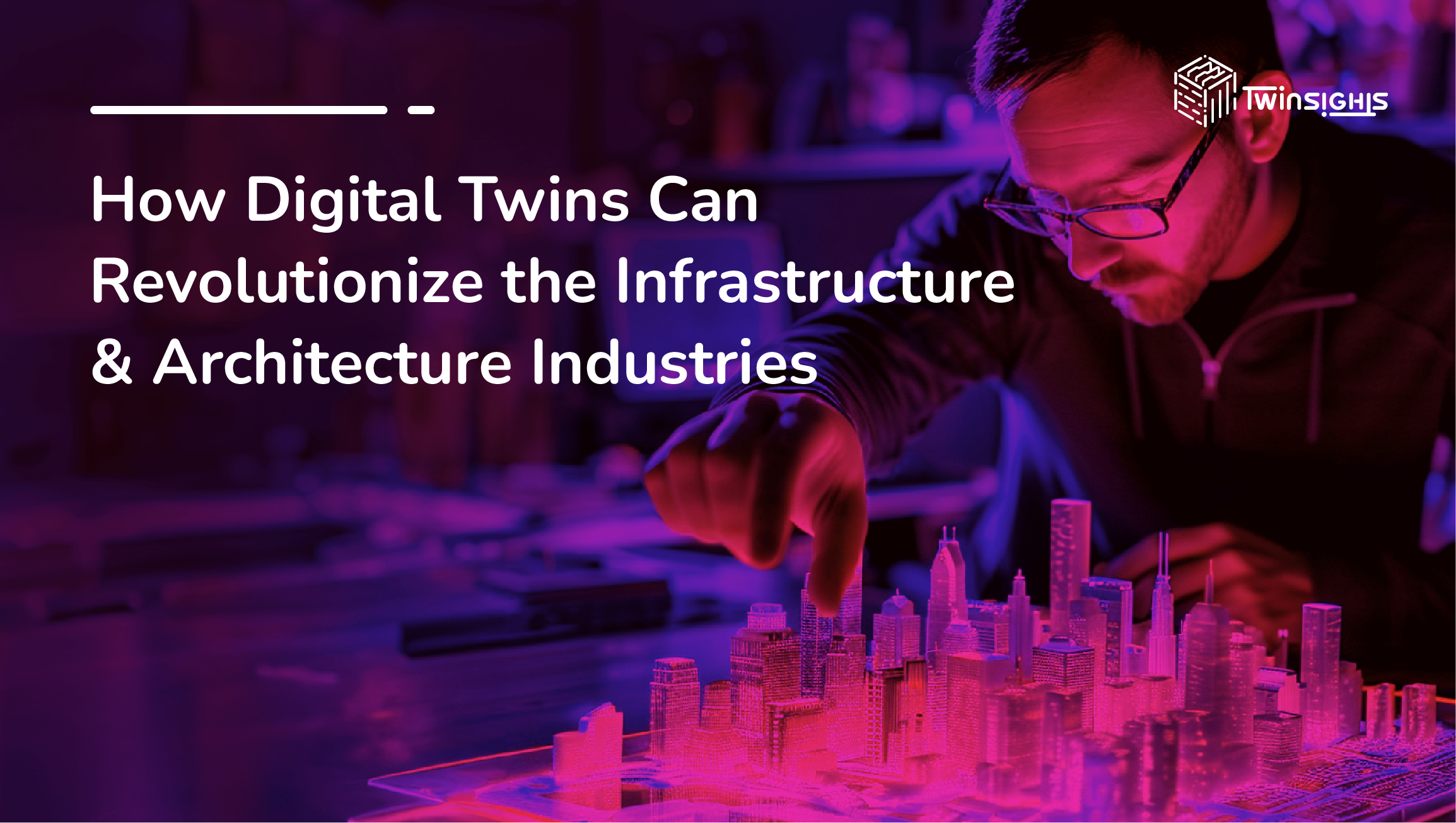
The Rise of Digital Twin Technology

With the construction of a growing number of ambitious infrastructure projects, and organizations undertaking increasingly complex operations, Digital Twin technology has seen an explosive increase in adoption across the globe. Whether it’s building large skyscrapers or testing the feasibility of getting employees back to work, Digital Twin technology has simplified planning and helped ensure the successful execution of projects across a variety of industries. 

But how did Digital Twins get so popular? How is it different from CAD or Modelling? Why is everyone adopting the Digital Twin technology? We’ll explore all these questions in this blog. But before we begin, let us briefly understand what Digital Twin Technology is.

What is Digital Twin Technology?

As the name suggests, Digital Twin Technology helps create a digital likeness of your project or operation. One of the use cases of this digital version is that it allows organizations to simulate their projects and see how they behave in various scenarios without having to make changes to the real project. But how is this different from CAD or Modelling? 

Digital Twins vs CAD and Modelling

Digital Twin technology has been born from CAD and Modelling technologies. These technologies allow you to create a digital simulation of your operation and see how it performs in different scenarios. This takes one step further, allowing users to not only simulate but also add data from other systems to get a deeper understanding of the current situation and what might happen in the future.

Benefits of using Digital Twins

Digital Twins opens up completely new opportunities for organizations across the board. 

Drastically reduce the time to market

In getting to market, organizations spend a lot of time when creating and designing their products or services. Digital Twins allow organizations to rapidly prototype their products, reducing the time it takes to get to market.

Help improve product quality

Simulating a product’s manufacturing allows companies to identify potential flaws and errors, helping them improve product quality before it gets to production. 

Allows for making real-time adjustments

Using digital twin technology for projects allows the project managers to get real-time updates on the progress. This also allows them to make changes in real-time to avoid potential problems. 

Increase Environmental Sustainability

Designing and testing a product virtually allows organizations to reduce the excess material in product design, hence improving environmental sustainability. 

Make completely data-driven decisions

Digital Twin technology gives organizations access to real-time data throughout their operations. This allows the management to make informed, data-driven decisions, helping boost productivity. 

Boost Efficiency and Profitability

Virtual simulations of operations allow management to tweak operations and see the impact of their decisions without having to make any real-world changes, helping improve efficiency and long-term productivity.

As per a Gartner projection, the market for digital twins is set to reach $183 billion by 2031, and organizations across industries and the world are benefitting from the opportunities opened up by Digital Twin technology. Let’s explore how this technology is helping industries make a great impact!

Source: Precedenceresearch

How Various Industries Leverage Digital Twins

Digital twins in Manufacturing, Construction, Healthcare, Automotive, Smart Cities, Aerospace, Transportation

Aviation 

The aviation industry uses Digital Twin technology in various departments. From optimizing engine construction for higher fuel efficiency to simulating operations for improving connectivity, this game-changing technology makes a lot possible for the aviation industry. 

Consulting

Organizations such as TCS utilized this technology to simulate the work environment as more and more employees came back to work from the office and plan accordingly for all possible contingencies. Source: CNBC

Manufacturing 

The process of manufacturing benefits greatly from the use of Digital Twin technology as it allows for the testing of new products before they’re put into production, predictive maintenance, and much more. 

Space

Organizations such as SpaceX have used this technology to maximize reliability and safety by monitoring and adjusting the trajectory, propulsion systems, and many other aspects of the spacecraft. 

Automotive

From streamlining assembly and manufacturing to designing and prototyping new vehicles rapidly, the automotive industry uses digital twin technology to continuously push the boundaries for this industry.

Infrastructure Construction

Both public and private infrastructure benefit immensely from the use of digital twin technology. This allows for real-time tracking, improved internal comms, access to better data, and a lot more, helping get these projects completed on time and within budget. 

Supply Chain

Getting materials from their source to a factory, and the final products from the factory to the consumer involves long, complex supply chains which include many moving parts. Digital Twin technology makes keeping these parts in sync easy and allows one to predict issues in the chain to avoid them from happening in the real world. 

Health Care

Providing the highest quality of healthcare to everyone requires precise management of all the different departments of a hospital. This is made simple and intuitive for health care providers by the use of Digital Twin technology, which also allows for the planning of unforeseen events such as a jump in the number of patients. 

Retail

The retail industry utilizes digital twin technology to simulate changes in consumer demand and make adjustments in their supply in anticipation of potential changes in demand so that they’re never left unprepared. 

Digital Twins in Twinsights

Twinsights is a platform that makes efficient, sustainable growth possible through an intuitive platform designed to help organizations connect, consolidate, manage, and plan their projects and assets.

To help organizations achieve this growth, Twinsights offers a myriad of tools, including Digital Twins! With Twinsights, organizations can utilize this technology to:

  • View a variety of data that comes in from various sources, in a single platform
  • Get access to intelligible data and insights through AI
  • Align and get all stakeholders on the same page
  • Make changes to plans on the go
  • Improve the quality of their projects

and much more!

Explore how Twinsights leverages Digital Twins and many other revolutionary technologies to help organizations deliver on time and achieve exponential growth!

Follow us on LinkedInTwitterFacebook, and Instagram for more updates.

Streamlining Construction Operations: A Twinsights Adoption Case Study

In the dynamic realm of construction, the imperative for efficiency, accuracy, and digital transformation has become increasingly pronounced. This case study delves into the journey of a leading Contractor Group Company that specializes in diverse construction projects, ranging from buildings and roadways to utilities and water treatment plants. Faced with the challenges of manual reporting and a desire for comprehensive digitalization, the company turned to Twinsights, a cutting-edge digital platform.

Client Profile:

The Contractor Group Company, operating primarily under Siebel’s construction works, faced the complexities inherent in managing diverse construction projects. With an extensive portfolio that included buildings, roadways, utilities, and water treatment plants, the company sought a unified solution to streamline its construction operations, enhance efficiency, and transition from manual to digital reporting.

Objective:

Encouraging Digitalization and Unified Project Views: The overarching goal of the Contractor Group Company was to embrace digital platforms like Twinsights to foster the digitalization of their business processes. The company aimed to achieve a unified and centralized view of all their projects, moving away from traditional manual reporting methods. Twinsights was identified as the catalyst for this transformation, promising to drive efficiency across all levels of the organization.

Key Challenges:

  • Diverse Project Portfolio: Managing a wide array of construction projects posed challenges in terms of coordination, documentation, and reporting.
  • Manual Reporting: Relying on manual reporting led to delays, potential errors, and hindered the company’s ability to make informed decisions promptly.

The Contractor Group Company strategically adopted Twinsights to address their challenges comprehensively. The platform’s digital project management capabilities became instrumental in achieving the desired digital transformation.

Benefits Realized:

  • Timely and Accurate Project Information:
    Twinsights facilitated the company’s transition from manual reporting to a digitalized system, enabling them to access project information in a more timely and accurate manner. Real-time updates and data visualization contributed to informed decision-making at every stage of the construction process.
  • Unified View of Projects:
    The platform provided a unified view of all projects, allowing stakeholders to monitor progress, identify bottlenecks, and streamline communication. This transparency across projects fostered collaboration and coherence within the organization.
  • Efficient Document Management:
    The digital project management component of Twinsights played a pivotal role in storing and organizing project documents. This centralized repository ensured easy access to critical information, reducing the time spent searching for documents and enhancing overall project efficiency.
  • Moving Beyond Manual Reporting:
    By embracing Twinsights, the Contractor Group Company successfully moved away from manual reporting, unlocking a new era of efficiency and accuracy. The platform’s user-friendly interface and robust features enabled seamless integration into existing workflows, minimizing disruptions during the transition.

The adoption of Twinsights proved transformative for the Contractor Group Company, heralding a new era of digitalization in their construction projects. By leveraging the platform’s capabilities, the company achieved a unified view of projects, streamlined construction operations, and bid farewell to manual reporting inefficiencies.

This case study serves as a testament to the tangible benefits of embracing digital platforms in the construction industry, paving the way for increased productivity, accuracy, and a future-ready approach to project management.

Follow us on LinkedInTwitterFacebook, and Instagram for more updates.
Transforming Mega Highway Construction: A Twinsights Case Study

In the realm of infrastructure development, the Malaysian Government embarked on an ambitious Mega Highway Construction Project, spanning over 1000 kilometers. This colossal undertaking involved numerous stakeholders and a commitment to timely completion, cost-effectiveness, and high construction quality. To achieve these objectives, the government embraced cutting-edge digital technologies, prominently featuring Digital Twin technology through the innovative platform known as Twinsights.

Project Overview:

The Mega Highway Construction Project aimed at revolutionizing transportation, promising a 40% reduction in travel time for both commuters and goods. With such substantial socio-economic benefits at stake, the government prioritized a digital approach to ensure efficient project management, asset management, and overall project success.

Digital Twin Technology and its Integration:

At the heart of this transformative project was the integration of Digital Twin technology. Twinsights created a comprehensive digital replica that mirrored the entire lifecycle of the construction project. This allowed stakeholders to visualize, analyze, and optimize each phase, from planning to execution and maintenance.

Key Technologies Enabling Success:

  • Building Information Management (BIM): Twinsights seamlessly integrated BIM to manage and share vital project information. This collaborative platform facilitated real-time collaboration among architects, engineers, and construction teams, ensuring accurate and up-to-date data throughout the project.
  • Geographical Information Systems (GIS): GIS played a pivotal role in spatial analysis and decision-making. It provided a geographic context to project data, aiding in route planning, environmental impact assessments, and resource allocation. The integration of GIS enhanced overall project efficiency and sustainability.
  • Drone Survey Technology: Drones were employed for comprehensive surveying, offering high-resolution imagery and topographical data. This data was seamlessly integrated into Twinsights, providing accurate and timely information for informed decision-making.

The Twinsights Advantage:

Twinsights emerged as a dynamic and flexible platform, aligning government processes and localization efforts seamlessly. The collaborative nature of the platform allowed multiple stakeholders to access the same digital space, ensuring that every construction process adhered to the predetermined plan.

  • Automation and Process Enhancement: One of the significant benefits derived from Twinsights was the automation of numerous processes and workflows. This not only streamlined operations but also ensured that critical milestones were met without manual intervention. Automation allowed for precision and consistency, reducing the likelihood of errors and delays.
  • Government Process Digitalization: The adoption of Twinsights led to the digitalization of governmental processes. This transformation empowered the Malaysian Government to transition from traditional methods to a modern, data-driven approach. The platform served as a centralized hub for decision-making, fostering transparency and accountability throughout the project’s lifecycle.

In conclusion, the Mega Highway Construction Project in Malaysia stands as a testament to the transformative power of digital technologies, with Twinsights at its core. The government’s commitment to leveraging Building Information Management, Geographical Information Systems, and Drone Survey outcomes through a digital twin approach resulted in enhanced collaboration, streamlined processes, and ultimately, the successful delivery of a monumental infrastructure project. As nations continue to embrace digitalization, this case study serves as inspiration for future mega projects, demonstrating the tangible benefits of fusing innovative technologies with ambitious infrastructure initiatives.

Follow us on LinkedInTwitterFacebook, and Instagram for more updates.

Maximizing Efficiency: Enhancing the Digital Asset Lifecycle with Digital Asset Management (DAM)

The management of digital assets poses a significant challenge for every organization, despite their essential role. It is imperative to establish a comprehensive strategy for overseeing digital assets throughout their lifecycle, encompassing creation, distribution, and addressing security and accessibility concerns at each stage. Digital Asset Management (DAM) is instrumental in both securing and structuring digital assets. This blog post will delve into the digital asset lifecycle, exploring how DAM can be a valuable tool in enhancing this process.

Managing a plethora of digital assets efficiently is crucial for businesses aiming to stay ahead of the curve. Digital Asset Management (DAM) is emerging as a powerful solution to streamline the entire lifecycle of digital assets, from creation to archiving. In this blog, we’ll delve into the significance of DAM and explore practical ways to enhance the digital asset lifecycle.

The Key Phases of the Digital Asset Lifecycle Encompass: 

  • Creation: Crafting successful digital asset initiatives starts with strategic planning and thorough research. This involves a comprehensive understanding of the target audience, evaluating competitive strategies, and brainstorming content to achieve desired business outcomes. Once an effective blueprint is established, the design implementation follows through collaborative efforts among teams. The process includes reviews and approvals to ensure optimal results before deploying the finalized asset.
  • Management: Proper organization is crucial to guarantee that a digital asset is readily available when needed. Tagging and uploading to a centralized, accessible location establish governance, ensuring the asset stays up-to-date and facilitating effortless retrieval and usage. By efficiently organizing and storing digital assets in a centralized location with necessary governance measures, teams can always access updated documents swiftly, thereby streamlining workflow processes for all involved.
  • Distribution: To meet the diverse needs of a business, digital assets must be shared and distributed. Facilitating easy, secure, and traceable access allows teams to collaborate seamlessly on projects across internal departments or with external partners, all while adhering to security standards. To optimize efficiency, digital assets need to be widely accessible and securely shared, whether with external partners or internal teams. The cornerstone of this process is easy access, coupled with tracking capabilities that ensure maximum success in leveraging the asset.

Advantages of Digital Asset Management (DAM): 

Enhanced Collaboration:

  • Centralized Access: DAM provides a centralized repository for all digital assets, facilitating collaboration among team members regardless of geographical locations.
  • Real-time Updates: Team members can access the latest versions of assets in real-time, reducing delays and miscommunication.

Cost and Time Efficiency:

  • Reduced Repetitive Work: DAM eliminates redundant tasks by automating processes like file organization and version control, saving valuable time.
  • Optimized Storage: Efficient archiving and storage management result in cost savings by maximizing the use of available resources.

Brand Consistency:

  • Brand Guidelines Enforcement: DAM ensures that all assets adhere to brand guidelines, maintaining a consistent and professional brand image.
  • Quick Asset Retrieval: With powerful search capabilities, DAM enables quick retrieval of approved brand assets.

Compliance and Security:

  • Access Controls: DAM allows for granular access controls, ensuring that sensitive assets are only accessible to authorized individuals.
  • Version Tracking: Maintain a clear audit trail with version tracking, crucial for compliance and regulatory requirements.

Implementing Digital Asset Management (DAM) Best Practices:

  • Thorough Training: Ensure that your team is well-trained on the DAM system to maximize its potential.
  • Regular Maintenance: Conduct regular audits to ensure metadata accuracy and eliminate obsolete assets.
  • Integration with Existing Tools: Integrate DAM seamlessly with other tools in your workflow, such as project management and design software.
  • Scalability: Choose a DAM solution that can scale with your business growth, accommodating an increasing volume of digital assets.
  • User Feedback: Solicit feedback from users to continuously improve the DAM system based on real-world usage.

Digital Asset Management is a game-changer for businesses seeking to optimize their digital asset lifecycle. DAM is an indispensable tool that transcends the boundaries of business size. For well-established enterprises and burgeoning medium-sized businesses alike, DAM plays a pivotal role in the organization, optimization, and strategic deployment of digital assets. By implementing DAM best practices, organizations can unlock increased efficiency, collaboration, and brand consistency, ultimately positioning themselves for success in the dynamic digital landscape. Embrace DAM and witness the transformation of your digital asset lifecycle processes.

Follow us on LinkedInTwitterFacebook, and Instagram for more updates.

Digital Twins: Pioneering The Future Of City Planning And Infrastructure Management

Given the limited space in our cities and the projected majority of the global population residing in urban areas in the coming decades, there is minimal room for experimentation in urban planning. Decisions made today carry significant consequences for the future due to the critical impact they will have on the evolving urban landscape.

In the realm of urban development, the integration of cutting-edge technologies is reshaping the way we envision, plan, and manage cities. One such revolutionary concept that is gaining traction is the use of “Digital Twins.” This blog will explore the transformative impact of Digital Twins on city planning and infrastructure management, shedding light on how this technology is poised to redefine the urban landscape.

Understanding Digital Twins:

A digital twin is a virtual representation crafted to precisely mirror a physical entity. The subject under examination, such as a wind turbine, is equipped with various sensors that capture crucial data pertaining to key functional aspects. These sensors generate information on diverse facets of the physical object’s performance, including energy output, temperature, weather conditions, and more. Subsequently, this data is transmitted to a processing system where it is incorporated into the digital counterpart.

Once enriched with this data, the virtual model becomes a tool for conducting simulations, analyzing performance issues, and proposing potential enhancements. The overarching objective is to derive valuable insights, which can then be implemented back into the original physical entity.

The Role of Digital Twins in City Planning:

  • Accurate Simulation: Digital Twins provide a platform for simulating different scenarios, allowing city planners to visualize the impact of various changes before they are implemented. This facilitates more informed decision-making in areas such as land use, traffic flow, and public spaces.
  • Data-Driven Decision Making: By integrating real-time data from sensors, IoT devices, and other sources, Digital Twins empower city planners with a wealth of information. This data-driven approach enhances decision-making processes, leading to more efficient and sustainable urban development.
  • Community Engagement: Digital Twins offer an interactive and visual means for engaging the community in the planning process. Citizens can explore proposed changes, providing valuable feedback and fostering a sense of inclusivity in the decision-making process.

Revolutionizing Infrastructure Management through Digital Twin:

  • Predictive Maintenance: Digital Twins enable the continuous monitoring of infrastructure components in real-time. By analyzing data from sensors embedded in roads, bridges, and utilities, cities can predict maintenance needs, reducing downtime and prolonging the lifespan of critical assets.
  • Resource Optimization: Efficient allocation of resources is paramount in urban infrastructure management. Digital Twins help optimize resource usage by providing insights into energy consumption, water usage, and waste management, contributing to a more sustainable and eco-friendly urban environment.
  • Emergency Response Planning: In times of crisis, Digital Twins prove invaluable for emergency response planning. Simulations and real-time data help officials understand the potential impact of natural disasters or other emergencies, allowing for the development of effective response strategies.

Challenges and Considerations:

  • Data Security and Privacy: The extensive use of data in Digital Twins raises concerns about security and privacy. Cities must implement robust measures to safeguard sensitive information and ensure compliance with privacy regulations.
  • Integration of Technologies: Achieving a comprehensive Digital Twin requires the integration of various technologies and data sources. Cities must invest in interoperable systems to ensure seamless communication between different components.

Looking Ahead:

As technology continues to evolve, Digital Twins are poised to play an increasingly pivotal role in shaping the future of city planning and infrastructure management. The ability to simulate, analyze, and optimize urban environments in real-time offers unprecedented opportunities for creating smarter, more resilient, and sustainable cities. Embracing Digital Twins is not just a technological leap; it’s a paradigm shift in the way we envision and build the cities of tomorrow.

Follow us on LinkedInTwitterFacebook, and Instagram for more updates.